
Siblings Need Camp Too
11/15/2025 by Ana Cruz Kayne
My family’s Camp journey started with my brother Danny’s diagnosis: Osteosarcoma of the distal femur. As a 10-year-old, I would chew these words until it became rote — this diagnosis defined us.
Looking back, it’s impossible to forget the sounds and smells of our house when my brother was sick. There was an ominous hush; a secrecy bred of protection. The adults around me were exhausted and scared and preoccupied, and whatever the reason, I wouldn’t understand.
I knew that I was loved. My dad made sure I knew. But my parents’ love didn’t look like the love I saw in my friends’ homes. My friends had bedtimes, and they ate together as a family. I was unsupervised and dangerously independent. I was funny and irreverent, and there were no consequences because no one was watching. The more I leaned into these behaviors, the more isolated I became.
This escalated until my dad told me I was going with him to pick-up Danny from a summer camp with a wacky and wild name. It seemed pretty cringe, but I obliged.
We pulled up to the gate and were greeted with a kind of energy I’d describe as contagious! It was impossible to avoid the kindness and playfulness we were hit with the second we drove in. We were given nametags, and I made a joke about my name being “Danny’s sister.” A staff member asked, “How do you spell that?”
I loved that response. I wasn’t energetically made to feel like I did it wrong. They met me with a warmth and a humor that made me feel seen. This kind of connection meant everything to a kid who was deeply guarded and hurt. I began to soften.
When we got to the dining hall, my brother was unrecognizable. He had color in his cheeks and a certain swagger I hadn’t seen in years. His spirit had returned, and it wasn’t subtle.
That same summer, my Dad asked if I wanted to attend Camp as a sibling camper. I agreed even though I was scared to be away from my family. As adult as I felt, I was just a child. I forgot that about myself.
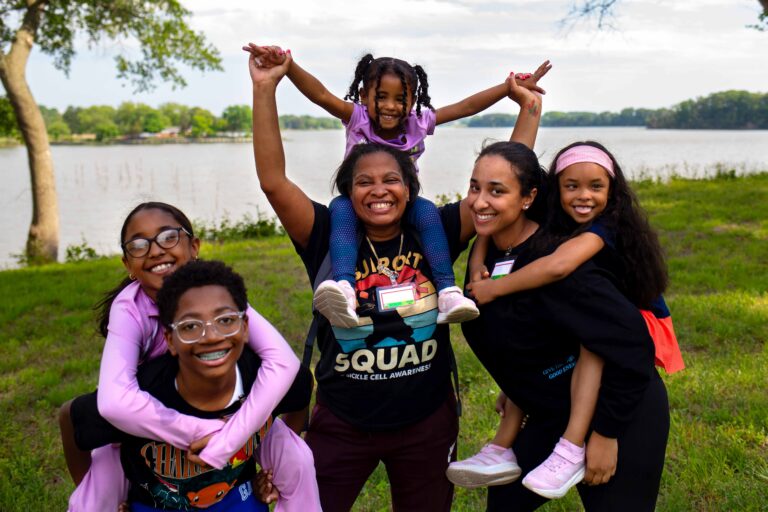
During sibling session, we played games and danced with abandon, and everything was scheduled. That felt good to me. The other girls in my cabin came from similar households, and it wasn’t dramatic to say “when my brother got his central venous catheter…” But more than that, we didn’t have to talk about it. We were just us. It felt safe and fun. And fun was not a common occurrence. Camp began to chip away at my many layers of self protection. And that’s what kept me coming back for 15 summers as cabin volunteer.
I am so grateful that Doc Pearson and the Newmans had the foresight to acknowledge the needs of siblings. Sibling session saves lives. And that’s no small fry.